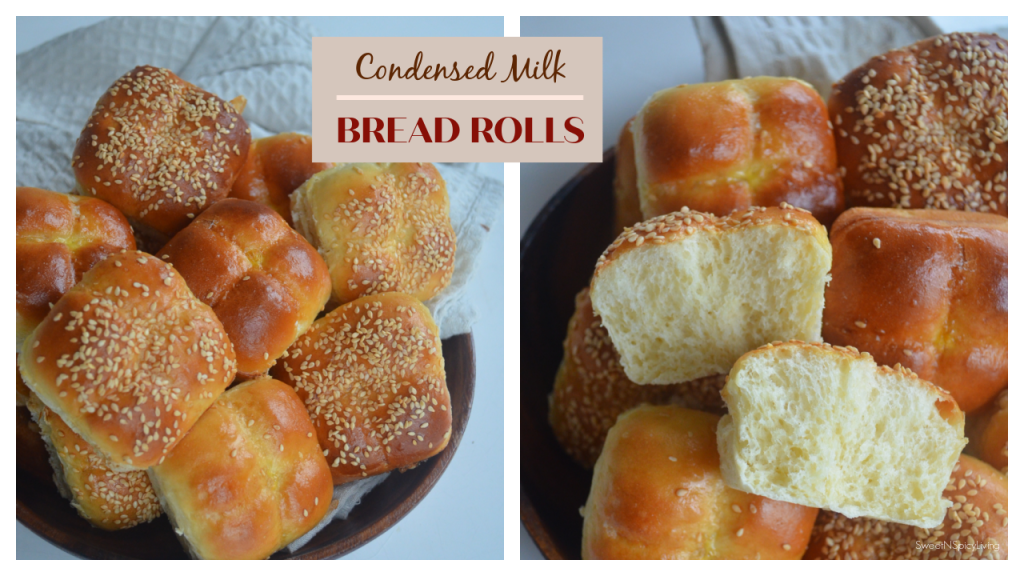
Condensed Bread Milk .. are you with me or not? Come on, don’t run away! I know condensed milk sounds to be so heavy an creamy for a bread, but trust me, it works. Afterall, condensed milk is just reduced milk and sugar which is not uncommon in bread recipes. I had so much fun making this bread and I hopw you will have fun too.

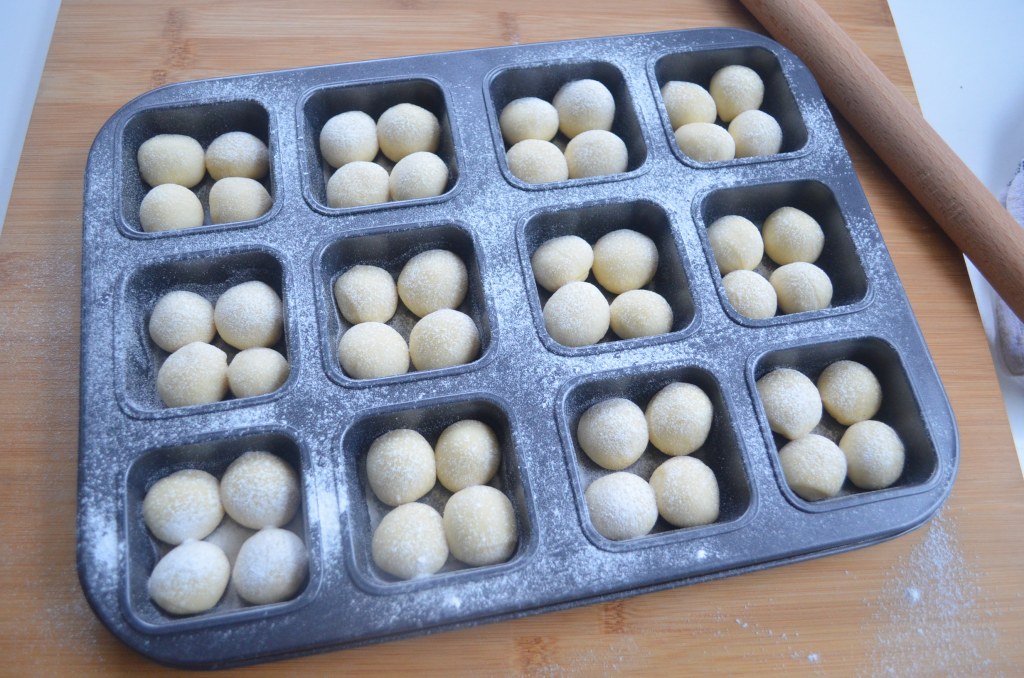
I used this pan with 12 individual square sections but you can bake this as simple dinner roll style, or have them twist and knot. Shape them however you want to and enjoy the process.

Getting to Know Condensed Milk
Condensed milk is cow’s milk from which water has been removed and to which sugar has been added, resulting in a thick, sweet product. It was first developed by Gail Borden in 1853, and became popular due to its long shelf life without refrigeration. Commonly used in desserts, candies, and baked goods to add sweetness and creaminess. There are variations such as sweetened condensed milk and unsweetened condensed milk. Sweetened condensed milk is the more commonly used variety. It is high in calories and sugar, so it should be consumed in moderation as part of a balanced diet. Used in various traditional recipes around the world, such as Vietnamese iced coffee and Brazilian brigadeiros.
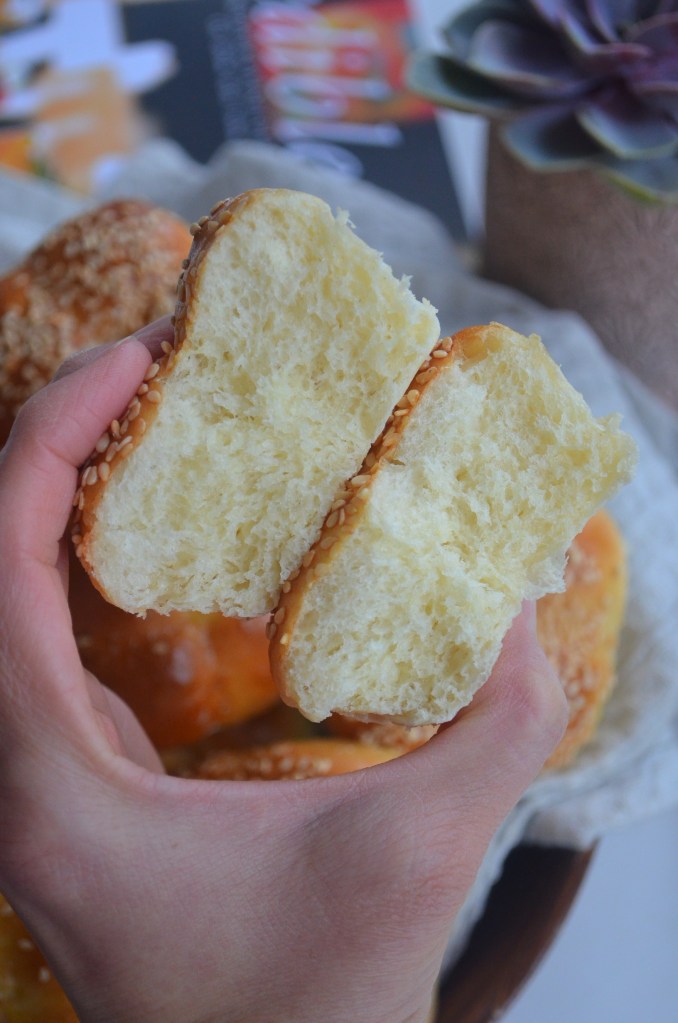
Tips for a Successful Soft Homemade Bread
- Liquid Temperature – Yeast grows in temperature between 105 – 110F, so its important to have the water that you are using to “proof” it in this range. If you go lower or higher, the yeast might not proof properly. That means the bread will not rise as much, resulting to a flat and tough bread.
- Check Yeast Expiry a Date – you might be wondering how come the bread did not rise when you followed exactly the recipe. Well, first thing first, make sure the yeast is not yet expired. Expired yeast is the common reason for flat and dense bread. If your bread did not expand or rise during the rest period, it is most likely that the yeast is not fresh or the water temperature is too hot or cold.
- Amount of Yeast – Just because you want a tall bread doesn’t mean you have to put as much yeast in the mixture. Sometimes adding too much yeast can cause the bread to collapse during the rest period. Just imagine putting more air than what is needed in a balloon, the balloon will explode. The same case with bread.
- Right Type of Yeast – Make sure to use the right type of yeast for your recipe, and make necessary adjustments if you want to swap one from another. Active dry yeast and instant yeast not a 1:1 ratio. Usually, instant yeast is 25% less than active dry yeast.
- Rest Period – Yeast bread needs time to rise. There are bread that uses less yeast but requires more rest time, the likes of No Knead Bread or Artisan Bread which usually require 8- 16 hours rest period to get the volume and to develop the flavor. The point is, give it time to rest, don’t touch it just leave it in a warm place. The first rest period will normally tell you if your dough is good or not. If it rise and almost double in size, then your on the right track.
- Expiration and Quality of the Flour – The quality of the flour greatly affect the texture of the bread. Flour could differ from country to country although they are all called as all-purpose flour or bread flour. Sometimes it also depends on the brand. The age of the flour is also a factor, the closer the flour to expiration date or if it is already expired, the flour could tend to be drier, which means it would require more liquid than mentioned in the recipe. This is a common issue of way sometimes the dough tend to be tough and dry. This is why sometimes you have to add few more tablespoon of flour or wet ingredients from the suggested flour measurement to get the right texture. The dough should be soft, smooth and elastic. If it is too wet, add a bit more flour until it is no longer to sticky to handle. If it is too dry, a small amount of liquid helps provide moisture to the dough. A clean side of the bowl, with the dough slightly sticking at the bottom, a soft, smooth and elastic dough is what You are aiming for.
How do I Know if I Made the Bread Dough Correctly?
- Activating the Yeast – This is the first thing that you should get right, otherwise do NOT proceed. After 5 – 10 minutes you should see a foam forms on top of the water, this is an indication that the yeast is alive. If you do not get this, either the yeast is old or the liquid temperature is too hot or cold. The temperature should be 110F, lukewarm but not hot. If using instant yeast, you do not have to activate it.
- Clean Bowl After Kneading – The sides of the bowl should be clean, while the bottom is slightly sticking to the dough. This means that amount of liquid to the flour is correct. Enough to make a clean bowl and still make a slightly wet dough.
- Soft Dough – Soft dough means the amount of flour to liquid is enough. Too much flour could make the bread dense and heavy, and too much liquid could make it too wet. Both will affect how the bread rise in the rest period. Try to push your fingers in the dough, it should leave a “dimple” on the dough and should gradually disappear.
- Smooth Dough Surface – Again, this is a sign of correct flour to liquid ratio. A “bumpy” surface could mean that the dough is dry and tough.
- Elastic Dough – A soft dough is usually elastic. If your dough is dry and tough, it wouldn’t be as elastic when you pull it apart.
- First Rest Period – The dough should almost double in size. This is a sign that the activation of the yeast work which is crucial to making a soft and fluffy bread. This also means the yeast is alive (not yet expired) and the liquid temperature is correct. I always use baking thermometer to check the temperature of the liquid. Normally, first rest period is a minimum of 1 hour to maximum of 1 1/2 hours, at this time the dough should double in size already, otherwise your bread is in trouble.
- Second Rest Period – The bread dough should be really puff up. This is crucial and the final state of the bread before baking. If you are able to make it puff-up, that is a good sign that there are air trapped inside which will make the bread fluffy. Some recipe requires only 1 rest period, so your check point is the the 1st period.

Why is My Dough too Wet or too Dry?
Don’t get frustrated if your dough did not turn out immediately as what you see in the photo or video. Most likely It is not because you did not follow the recipe. When it comes to bread making, the amount of flour and liquid is not always 100% precise. This is why often times you will encounter recipes that says, if your dough is dry, add a bit more liquid. If your dough is too wet, add a little bit more flour. This instructions are not meant to confuse you, they are meant to guide you on how to adjust as you work through your dough. The reason for this is that although the measurement of water and flour are specified in the recipe, it still could slightly vary depending on many factors. For instance, all-purpose flour could very from country to country, or even from brand to brand. Don’t be surprise if you find that some brand tends to require a bit more liquid as the others. On top of this, the amount of liquid is also affected by the state of your flour. How old is the flour that you are using? Older flour nearing expiry tends to be drier and this requires more liquid. Humidity also affects baking. The more humid it is, the more likely the dough will be sticky and wet. Bread making requires patience, and practice. Once you learn how to feel the right texture of the dough, everything will be quick and easy. You can instantly tell if you need to add more water or flour to get the dough in right state.
Ingredients:
- 1/4 cup warm Full Fat fresh Milk (110F) – microwave 15 seconds (set aside 2 tbsp for mixing with the egg)
- 1 1/2 tablespoon granulated Sugar (Divided: 1/2 teaspoon for the yeast, remaining for the flour)
- 1 1/4 teaspoon Active Dry Yeast or 1 teaspoon Instant Yeast
- 1/4 cup Condensed Milk
- 1 large Egg – room temperature
- 1 1/2 cups All-Purpose Flour
- 1/2 teaspoon Salt
- 1 tablespoon softened unsalted Butter
For the top:
- 1 large Egg, beaten + 1 teaspoon Water
- 2 tablespoons Sesame Seeds (optional)
Instructions:
- Activate the Yeast: Pour 6 tbsp of fresh milk is the mixing bowl. Add 1/2 teaspoon sugar and stir. Add active dry yeast, stir and leave for 10 minutes to bloom.
- If using instant yeast, mix the yeast with the dry ingredients. No need to activate it.
- Add Wet Ingredients: Mix the egg and remaining fresh milk together in a glass and pour 3/4 of the mixture to the yeast. Set aside the remainin 1/4 of the mixture and add gradually as needed.
- Add Dry Ingredients: Add the flour, salt and remaining sugar.
- Add the Condensed Milk & Egg: To the mixture, add the condensed milk and egg. Knead for 15 minutes.
- Gradually add remaining egg and milk mixture, until the dough comes together and is still slightly sticking to the bottom of the bowl. If you notice that the dough is dry, add 1/2 teaspoon of liquid at a time and continue kneading at least 3 minutes after every addition.
- To Check: The dough should be smooth, soft, elastic and slightly sticking to the bottom of the bowl
- Add the softened butter and knead for another15 minutes. When you add the butter, you will notice the dough will break apart and it will look like it is too wet. Do not panic, this is expected. Continue mixing (even if longer than 15 minutes) until the dough comes together completely (it will), the side of the bowl is clean and the dough is slightly sticking at the bottom of the bowl. Do not stop mixing until you get to this stage. It takes time to fully incorporate the butter to the flour mixture, be patient.

7. Let Rest 1st Time: Place the dough in a greased bowl, turning it to coat with oil. Cover loosely with plastic wrap or warm towel, and then let rise in a warm place for about 1 hour, or until doubled. (Rising time is dependent on the temperature of the room; let rise until the dough is doubled).
Trick: Pre-heat the oven to 110F then turn it OFF. Put the covered dough inside for 1 hour.
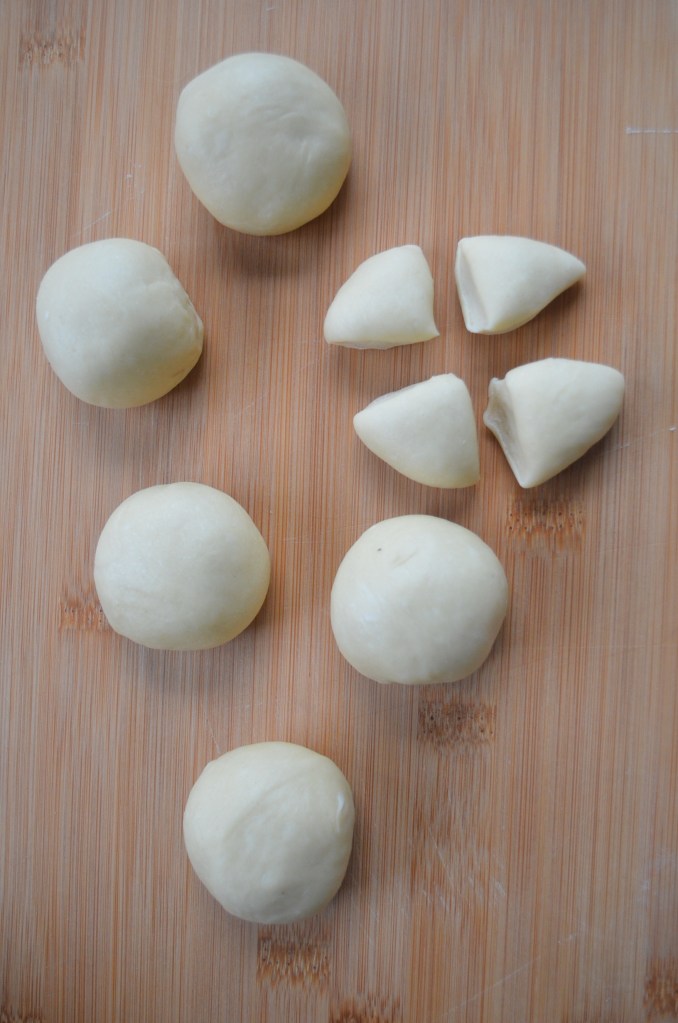
8. Shape the Dough: Punch the dough down very well, and gather it into a ball. Divide the dough into 12 portions. Use a kitchen scale if you have one. Divide each portion into 4 small pieces and shape it inot a ball.
9. Arrrange in the Pan: Arrange the ball of dough in thepan. If you do not have the pan shown in the photo, you can bake this as individual read rolls of 12 pieces, OR you can simply arrange it in a pan 4 peices of dough ball side by side close to each other. Just imagine a square pattern for each piece.


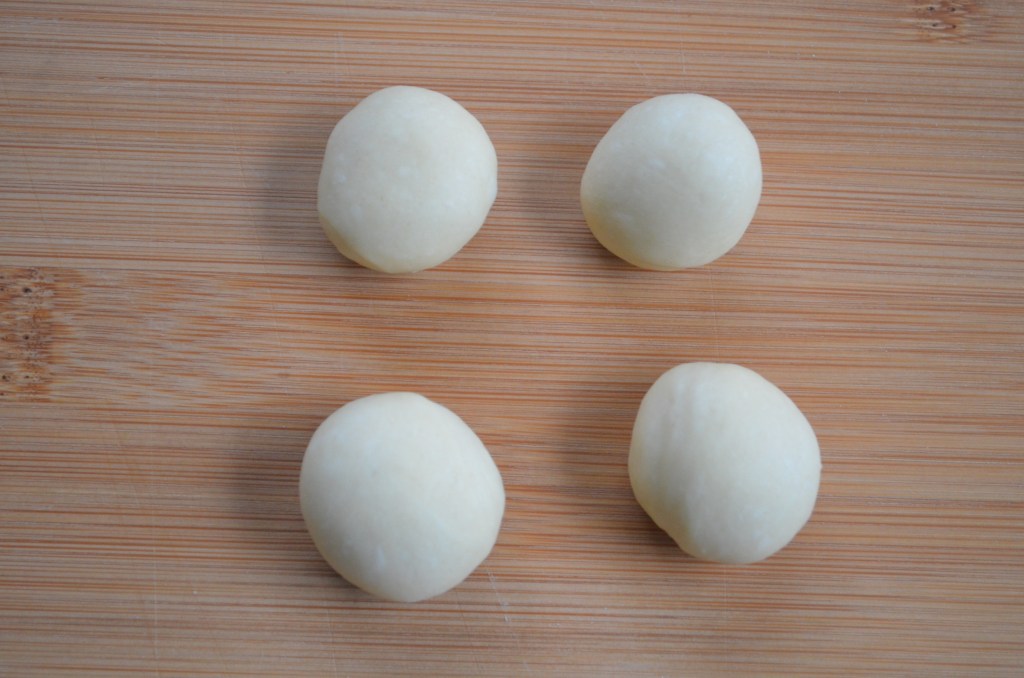

10. Let Rest 2nd Time: Place in a warm place to rise for 60 minutes. They will be puffy when ready, if needed extend until the bread is fully puff-up.

8. Pre-heat the Oven: Meanwhile, preheat the oven to 350F in the last 10 minutes of 2nd rest time. If you are using the oven to rest the dough, do NOT forget to take the dough out before pre-heating.
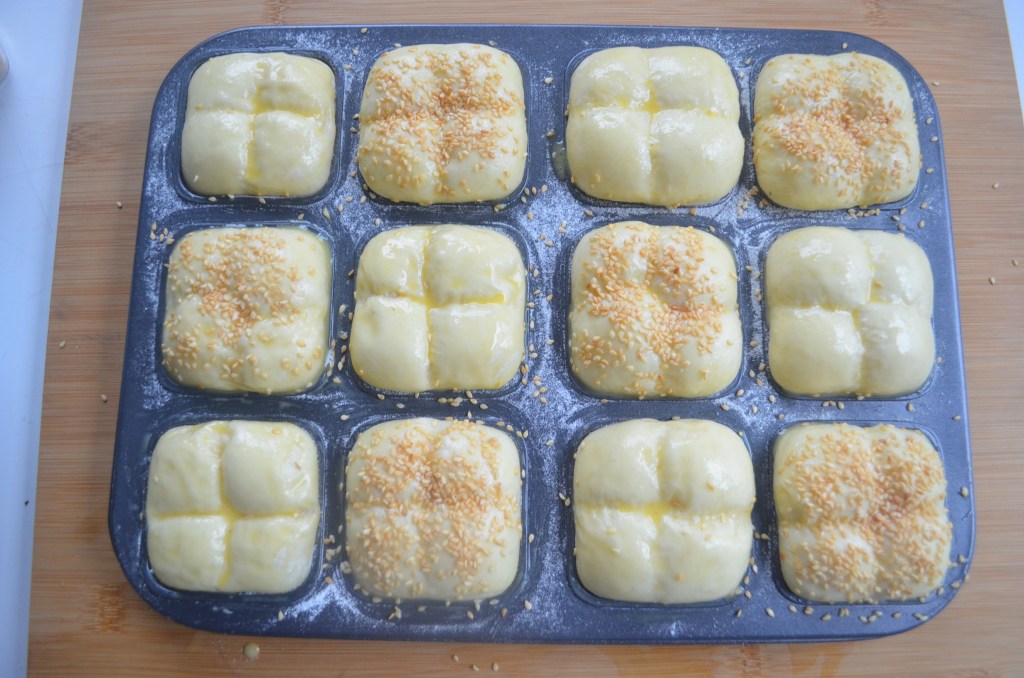
9. Brush Top: Mix egg and water. Brush top of each bread with egg wash then sprinkle sesame seeds on top or any seed topping of your choice. You can also top it with grated cheddar cheese or patrmeaan cheese.
10. Bake for 15 – 17 minutes, until deeply golden brown. Turn the tray half way though for even baking.

11. Let Cool completely to allow the bread texture to get better
Makes 12 pieces

Enjoy! If you make this, share and tag me in Instagram #SweetNSpicyLiving. I would like to see your creations too.
Featured Posts:
- 1 Hour Rosemary Dinner Rolls
- Parmesan Bread, Just 2 Pieces
- [VIDEO] Soft Gralic Bread
- Small Batch Dinner Rolls for Two (Makes 4)
- [VIDEO] All Around Bread Dough: Nutella Star Bread (Plus Bonus Twist Bread)
- [VIDEO] Parmesan & Green Onion Pull-Apart Bread
- [VIDEO] All Around Bread Dough: Italian Herbed Jalapeño & Cream Cheese Pull Apart
- Small Batch Apple Cinnamon Roll (Makes 4)
- Vegan Dinner Rolls
- [VIDEO] Soft & Fluffy Cheese Bread Stick
- [VIDEO] Korean Garlic Bread
- Purple Yam Flower Buns










My Latest Video
Thank You for visiting my website. Please don’t forget to click the “Like” button below if you like this recipe. Lastly, did you know that I have a YouTube Channel? Please support my channel by clicking on the “Subscribe” button in my video and the “Bell” icon to get notification of new videos.

FOLLOW SWEETNSPICYLIVING ON SOCIAL MEDIA
Facebook | Instagram | Pinterest | Twitter | YouTube
Share this:

Categories: Baking, Bread, Recipe, Small Batch Recipes, Video, Video Recipes
 SweetnSpicyLiving
 sweetnspicyliving.com
I’ve never seen them before, but they do look good.
LikeLike
It was my first time making it too .. it was fun making it
LikeLike