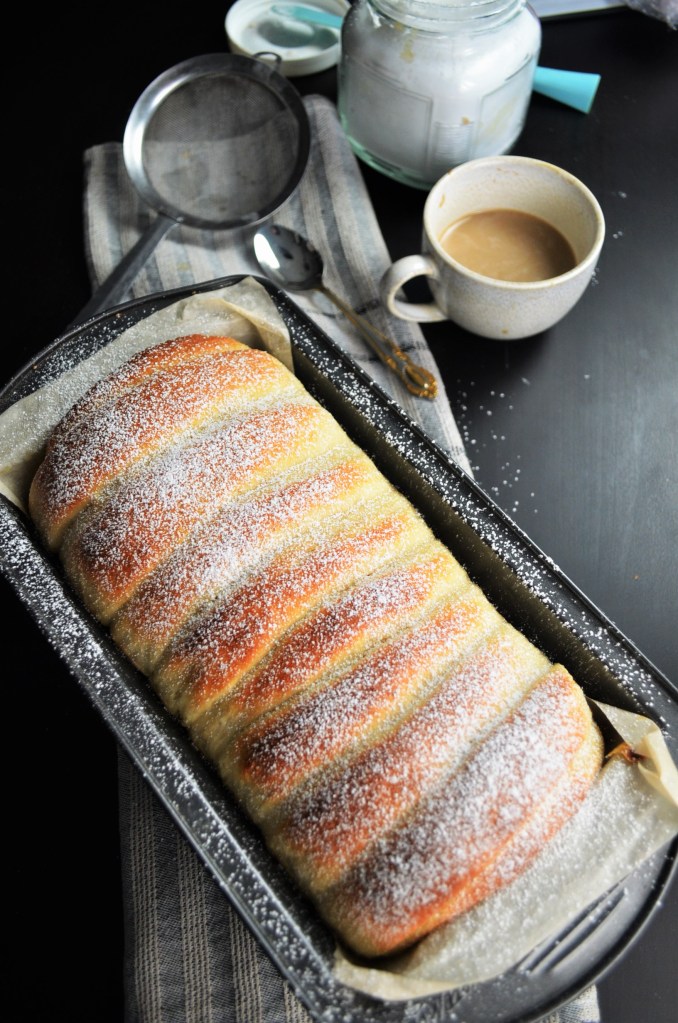
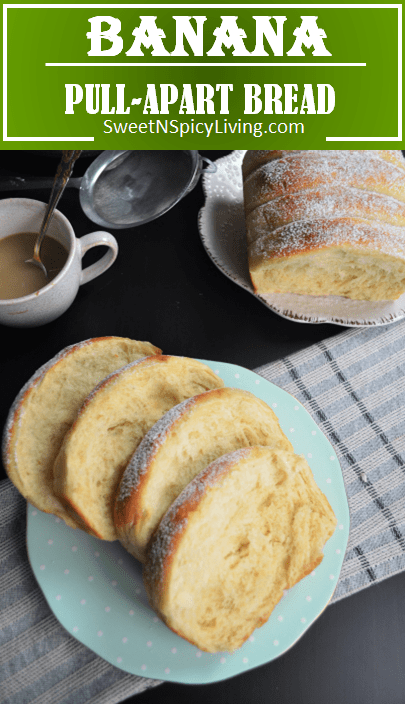
This is the softest and fluffiest Banana Pull-Apart Bread ever! It is not only soft and fluffy, it does actually have a nice banana flavor. It looks almost like a fluffy cake, but it is actually a bread!
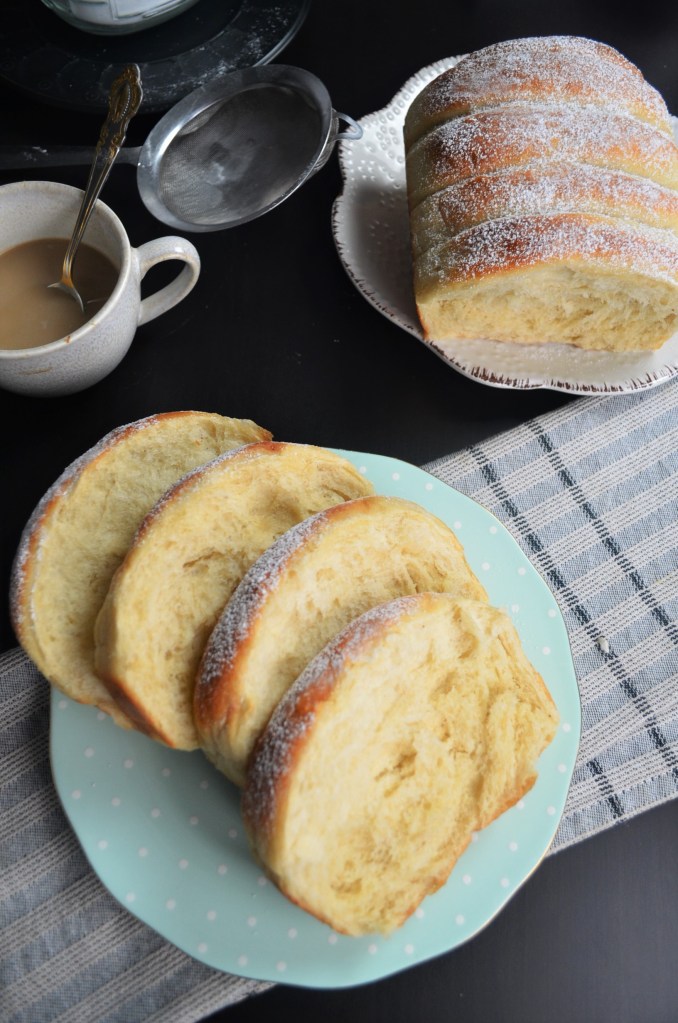
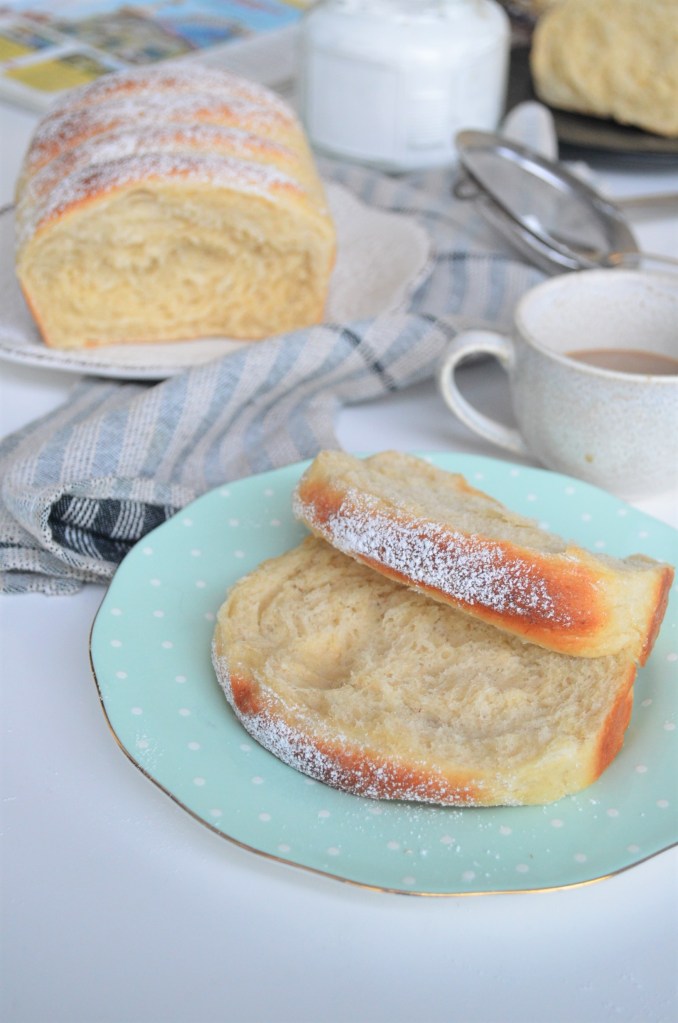
This is one of my new favorite homemade bread loaf. Banana loaf bread so soft and fluffy with subtle sweetness and true banana Flavor in every slice.
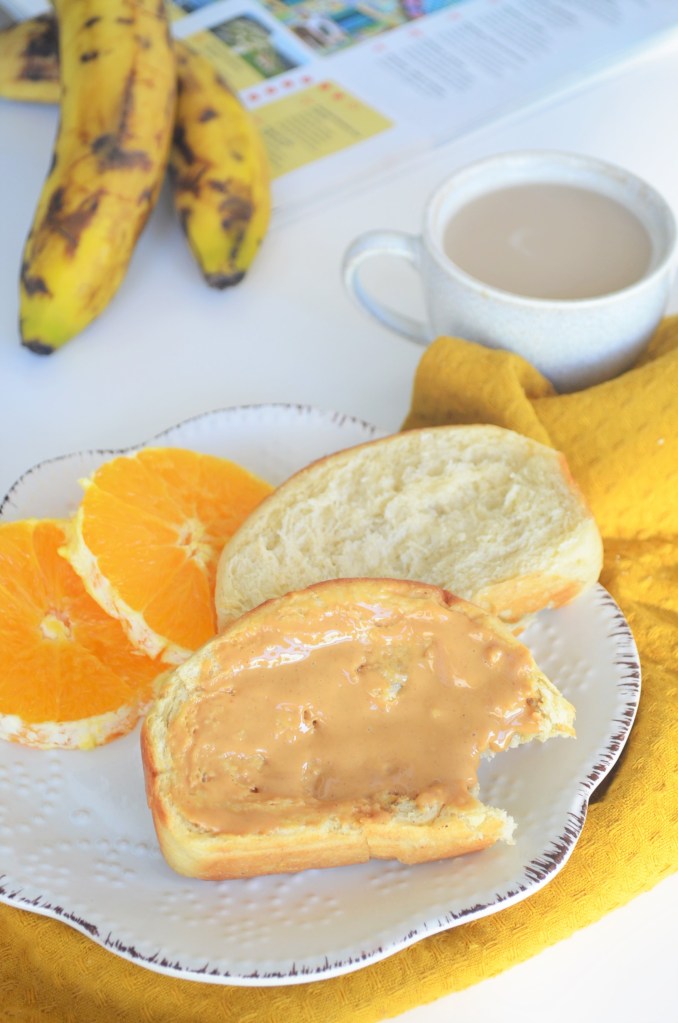
I often make banana bread, but never a banana loaf bread where I put some spread on it. I have a lot of banana bread recipe in my website, from plain to decadent chocolate flavor, or those with fresh fruits in it. This one is different, it is actually a bread loaf similar to slice bread but better. I cannot express in words how delicious and soft this bread, I guess more than just taking my word for it, you have to give it a try to taste for yourself.
How is this Different from Any Banana Bread?
This is Not a Quick Bread
The banana bread that we are most familiar with belongs to the family of quick bread. Most recipe call for mixing the dry ingredients and wet ingredients separately then combining both. Often, recipes like this can be made in 1 hour and sometimes they don’t even need a mixer, that’s why they are called quick bread. They’re super easy and quick to make. They are so quick and easy you can make it for breakfast or snack and they will be ready in no time.
This is a Yeast Bread
This on the other hand takes longer to make because it is a yeast bread. Yeast bread relies on the yeast and rest period to get the soft and fluffy texture. This also requires kneading to allow the gluten to develop. This is a real bread, like slice bread, a loaf bread where you can put some spread on it. This is a real bread, not a quick bread. The process is longer about 2 1/2 hours end to end because it uses yeast and it requires the dough to rest to develop good flavor and texture. I’m not saying this to scare you away, but simply to tell you, it’s totally worth it. So do not run away, ok?
This Bread Uses a Rich Dough
This bread recipe uses a rich dough. Rich dough are creamy and they have softer texture because of the fat from the ingredients like egg , butter and milk. Rich dough are used when making sweet bread and rolls, think about Cinnamon Rolls or soft Dinner Rolls.
Lean dough on the other hand is the opposite. It doesn’t use much fat, no milk, no egg, no butter. These are like artisan bread, french baguette, no knead bread, pizza dough, foccacia bread and naan bread.
Active Yeast vs. Instant Yeast
Because yeast plays a very important role is making this soft and fluffy bread, let’s take few minutes to understand it. What it is, what are the common types of yeast, the difference among the yeast, and what role the yeast do in bread. I normally encounter 2 types of yeast in most recipes, and in the grocery so I decided to focus on this two types of yeast, although there is a 3rd type “Fresh Yeast” but I never used it.
Types of Yeast
- Active Dry Yeast – This and the Instant Yeast are what I used in most of my bread. In terms of appearance and texture, this kind of yeast are coarser and have bigger granules. It requires to be dissolved in warm water with sugar to activate it. It normally takes 5-10 minutes to do this, and you will know that it’s been “awaken” when bubbles starts to form in the surface of the water, and you would be able to smell it too. This last longer in terms of shelf life and should be kept in a cool dry place. I kept mine in the refrigerator.
- Fast Acting or Instant Yeast – In terms of appearance, this kind of yeast have a finer granules as compared to active dry yeast. This does not require to be dissolved in warm water and sugar. This can be mixed directly with the dry ingredients such as flour, just make sure to keep it away from salt when you mix it as salt can kill the yeast when they touch directly with each other. I normally mix the flour, salt, then I add the instant yeast last. This should also be kept in cool and dry place. You basically save 10 minutes of time when you use instant active yeast as you skip the activation process.
Interchanging Yeast
You can interchange active yeast and instant yeast in the recipe, I sometimes do this when I have the other and the recipe calls for the other. You just have to be mindful of the measurement. For dry active yeast you generally need to use half the quantity of fresh yeast stated in the recipe and for instant yeast you need to use 1/4 of the quantity of fresh yeast. The fresh yeast has higher measurement, followed by active yeast, then instant yeast. Let’s say the recipe calls for 30g (1 ounce) of fresh yeast, you can substitute it with 15g (.5 ounce) active dry yeast, or 7g(.25 ounce) instant yeast. Just don’t forget that when you substitute instant yeast with dry active yeast, you have to dissolve it first in warm water to activated it. Do not just mix it along with other dry ingredients unless specified in the recipe.
So, now that’s the basic of yeast. Let’s have a look at some very important tips that we should bear in mind in making yeast bread.

Tips for a Successful Soft Homemade Bread
- Liquid Temperature – Yeast grows in temperature between 110 – 115F, so its important to have the water that you are using to “proof” it in this range. If you go lower or higher, the yeast might not proof properly. That means the bread will not rise as much, resulting to a flat and tough bread.
- Check Yeast Expiry a Date – you might be wondering how come the bread did not rise when you followed exactly the recipe. Well, first thing first, make sure the yeast is not yet expired. Expired yeast is the common reason for flat and dense bread. If your bread did not expand or rise during the rest period, it is most likely that the yeast is not fresh or the water temperature is too hot or cold.
- Amount of Yeast – Just because you want a tall bread doesn’t mean you have to put as much yeast in the mixture. Sometimes adding too much yeast can cause the bread to collapse during the rest period. Just imagine putting more air than what is needed in a balloon, the balloon will explode. The same case with bread.
- Right Type of Yeast – We’ve discussed the 3 types of yeast above. Make sure to use the right one for your recipe, and make necessary adjustments if you want to swap one from another.
- Rest Period – Yeast bread needs time to rise. There are bread that uses less yeast but requires more rest time, the likes of No Knead Bread or Artisan Bread which usually require 8- 16 hours rest period to get the volume and to develop the flavor. There are 1 hour bread like my Rosemary Dinner Rolls which used this same bread dough. The point is, give it time to rest, don’t touch it just leave it in a warm place. The first rest period will normally tell you if your dough is good or not. If it rise and almost double in size, then your on the right track.
- Expiration and Quality of the Flour – The quality of the flour greatly affect the texture of the bread. Flour could differ from country to country although they are all called as all-purpose flour. Sometimes it depends on the brand too. The closer the flour to expiration date or if it is already expired, the flour could tend to be drier, which means it would require more liquid than mentioned in the recipe. This is a common issue of way sometimes the dough tend to be tough and dry. This is why sometimes you have to add few more tablespoon from the suggested flour measurement to get the right texture. The dough should be soft, smooth and elastic. If it is too wet, add a bit more flour until it is no longer to sticky to handle. If it is too dry, a small amount of liquid helps provide moisture to the dough. A clean side of the bowl, with the dough slightly sticking at the bottom, a soft, smooth and elastic dough is what You are aiming for.
These are the 6 common points that I remind myself when making homemade bread. Bear this in mind and you’ll sure to have a nice soft homemade bread.

How do I Know if I Made the Bread Dough Correctly?
This is not written on the stone, but so far this is how I check if I am on the right track when it comes to the dough.
- Activating the Yeast – This is the first thing that you should get right, otherwise do NOT proceed. After 5 – 10 minutes you should see a foam forms on top of the water, this is an indication that the yeast is alive. If you do not get this, either the yeast is old or the liquid temperature is too hot or cold. The temperature should be 100F, lukewarm but not hot.
- Clean Bowl After Kneading – The sides of the bowl should be clean, while the bottom is slightly sticking to the dough. This means that amount of liquid to the flour is correct. Enough to make a clean bowl and still make a slightly wet dough.
- Soft Dough – Soft dough means the amount of flour to liquid is enough. Too much flour could make the bread dense and heavy, and too much liquid could make it too wet. Both will affect how the bread rise in the rest period. Try to push your fingers in the dough, it should leave a “dimple” on the dough and should gradually disappear.
- Smooth Dough Surface – Again, this is a sign of correct flour to liquid ratio. A “bumpy” surface could mean that the dough is dry and tough.
- Elastic Dough – A soft dough is usually elastic. If your dough is dry and tough, it wouldn’t be as elastic when you pull it apart.
- First Rest Period – The dough should almost double in size. This is a sign that the activation of the yeast work which is crucial to making a soft and fluffy bread. This also means the yeast is alive (not yet expired) and the liquid temperature is correct. I always use baking thermometer to check the temperature of the liquid.
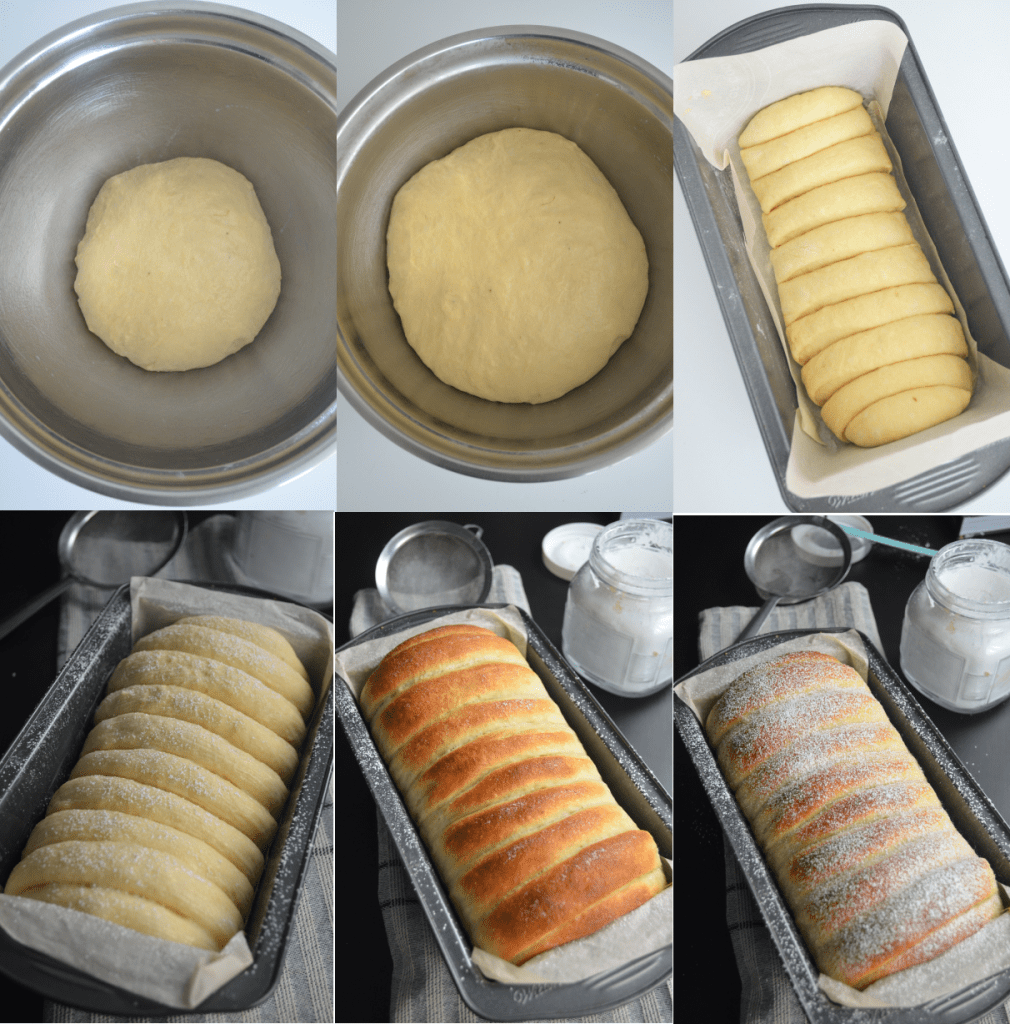
- Second Rest Period – The bread dough should be really puff up and should fill in the gaps between each bread. This is crucial and the final state of the bread before baking. If you are able to make it puff-up, that is a good sign that there are air trapped inside which will make the bread fluffy.
Now that we have a background about Yeast and tips for, bread making, let’s check the recipe.

4 Methods to Make This Dough
- Stand Mixer – This is what I always use when I make this dough. It’s the fastest and easiest method and less manual handling. This is the step outlined below in the instruction
- Hand Mixer – Use dough attachment as regular hook attachment will not work. The thick and heavy dough will jam a regular hook attachment. Also, it’s going to be too heavy for the hook attachment to mix the dough
- Manually – If you don’t have any electronic baking equipment for making the dough, you can do it manually. Simply follow the same instructions, do the mixing in a large bowl and transfer in counter top and knead manually. It will take a lot of arm exercise, but I’m telling you, it’s worth it.
- Bread Machine – If you have a bread machine, you can make the dough in the bread machine and then transfer it in a loaf pan for baking in the oven. Activate the yeast in the bread machine pan, then all all the other wet-ingredients including mashed banana. Then add all the dry ingredients. It is very important to add all the wet ingredients first so that it mix easily.

Can I Use All-Purpose Flour?
Yes you can. The texture will be slightly different because bread flour has higher protein which produces a more compact chewy bread texture as compared to all-purpose flour. Bread requires higher amount of protein to produce lots of gluten. Gluten is the stringy strands that give the dough its stretch and elasticity which gives a nice chewy texture. All purpose flour produces a lighter texture, it won’t produce quite the same texture, but it’ll be close enough.

Helpful Tips in Making this Banana Pull-Apart Loaf
- Mashed the banana then measure it to get 1/3 cup. I did not specify the number of banana because banana vary in size. How large is large? My large banana could be different from your large banana. If you end up using more banana than needed, you will end up with a wet dough and you full have to trouble shoot it by adding more flour.
- Cinnamon adds a nice flavor: I am not a fan of cinnamon, but j have to say adding even a small amount here makes s huge difference. It bring out the banana flavor in a nice way. If you have nutmeg, you can also add a pinch or more depending on your preference.
- No shortcut: you have to do the full 60 – 75 minutes rest period in the second rising to get the nice fluffy texture. Banana us quite dense and heavy, if you cut the rising period the bread will not rise as much and it will not this beautifully fluffy. I know because I almost tried cutting the rise period to 30 minutes, and u saw the huge differences in terms of lift when I compared it to 60 minutes wait.
- Dust top with Icing Sugar: Often times I would say brisk the top with egg wash, which is totally fine. But for this recipe, since this is more like a sweet bread loaf, I find that brushing butter on top and dusting it with icing sugar tends to be the better option. It added a nice sweetness, on top of making it look extremely inviting to pull-apart.
Variations:
- Sweet Potato Pull-Apart Loaf – Substitute the banana with same amount of mashed sweet potato
- Potato Pull-Apart Loaf – Substitute the banana with same amount of mashed Russet or Yellow Potato. Omit the Cinnamon powder
- Purple Yam Pull-Apart Loaf – Substitute the banana with same amount of mashed purple yam. Omit the Cinnamon powder
- Apple Pull-Apart Loaf – Substitute the banana with same amount of Apple.
- Pumpkin Pull-Apart Loaf – Substitute the banana with same amount of pumpkin puree or pumpkin pie filling.
Substitution for variations: The moisture of the replacement ingredients for banana will vary. When making the variation, you might need to slightly adjust the amount of flour. If the dough turned out to be slightly sticky, add 1 tablespoon of bread-flour until the dough is smooth and elastic but still slightly wet.
Ingredients:
- 1/4 cup Milk any percentage (warmed at 110F) or microwave for 20 seconds
- 1 1/4 teaspoon Active Dry Yeast
- 2 tablespoon + 1/2 teaspoon granulated Sugar (Divide: 1/2 teaspoon for yeast and 2 tablespoon for the dry ingredients)
- 1 tablespoon Butter (plus more for brushing the top) – softened
- 1 large Egg – room temperature
- 1/3 cup mashed Banana
- 1 3/4 cup Bread Flour
- 1/4 teaspoon Cinnamon Powder
- 1/2 teaspoon table Salt
- 1/2 teaspoon Icing Sugar (optional) – for dusting
Instructions:
- Mashed the Banana: Mash the banana using a fork or potato masher. Measure 1/3 cup and set-aside. Banana vary in size, you have to mash it first then measure.
- Activate Yeast: Microwave milk for 20- 25 seconds until lukewarm but NOT hot, aim for 110 F. If you have a baking thermometer, use it as it is the best way to be sure of the temperature. Hot milk will kill the yeast and the bread will not rise properly. Transfer milk in bowl of stand mixer (Refer to discussion above for other Methods of making this) and add 1/2 tsp of the granulated sugar and stir. Add the yeast and let rest for 10 minutes until mixture is foamy. If the mixture did not become foamy, either the yeast is old or the milk is too hot. Do NOT proceed until corrected, otherwise you will end up with a tough dense bread
- Add Wet Ingredients: Set mixer with paddle attachment and mix in remaining sugar (2 tbsp), egg and mashed banana on low-speed, just to mix every thing together.
- Add Dry Ingredients: Add salt and flour and mix on low-speed until combined, then switch to a hook attachment. Allow mixture to knead on medium-low speed about 5 minutes then add the softened butter until mix until smooth and elastic. If the dough is too sticky add 1 tbsp of flour at a time until the dough comes together, the dough should be slightly sticky, smooth, soft and but not too dry. If too much flour is added, the rolls will be dense and heavy. A good measure of correct texture is a clean mixing bowl with slightly sticky bottom, a soft, smooth and elastic dough just like the photo below
- First Rest Period: Remove the dough and shape into a ball. Transfer into a greased bowl (I used oil spray) and roll the dough inside the bowl to coat the dough with oil. Cover the bowl with plastic wrap or warm towel and allow to rest for 1 hour in a warm place. Greasing the bowl lessen the sticking of the dough in the surface of the bowl. The left photo is after 8 minutes kneading the dough, and the right photo is after 1 hour rest. It doubles in size.
- TIP: To help the dough rise faster, pre-heat the oven to 110F then turn it OFF and put the covered dough inside
- Shape: Take the dough out from the bowl and lightly push the dough down with the heel of the palm of your hands. Shape into an oblong shape then cut into 10 pieces.Transfer in an oblong shape loaf pan, or a 9-inch rectangular loaf pan big enough to hold the dough.
- Alternative Way to Bake This: Here are 3 options that I often use to bake this bread.
- 9-inch Loaf Pan: Shape the dough into a log shape and transfer in a parchment lined loaf pan.
- Muffin Tin: Brush each muffin tin hole with melted butter. Divide the dough into 10 pieces. Put each piece of dough ball into a muffin tin.
- Baking Dish: Divide the dough into 10 pieces. Arrange in a baking dish with the dough side by side. The dough will expand and it will look like a pull-apart rolls once baked.
- Cookie Sheet: Divide the dough into 10 pieces. Arrange the dough in a cookie sheet lined with a parchment paper. Allow at least 2-inches apart to give room when the dough expands. You can also have it close together without a gap to keep the sides moist and like a pull apart bread.
- Alternative Way to Bake This: Here are 3 options that I often use to bake this bread.
- 2nd Rest Period: Cover and let rest in a warm place for another 60 minutes. Preheat oven to 350F during last 5 minutes of dough rising.
- Dust with Icing Sugar: Brush top with softened butter then dust top with icing sugar.
- Bake at 350F
- Muffin Tin, Baking Pan, Cookie Sheet: Bake for 14 minutes until top turns brown.
- Loaf Pan: Bake for 18 minutes or until the top turns golden brown.
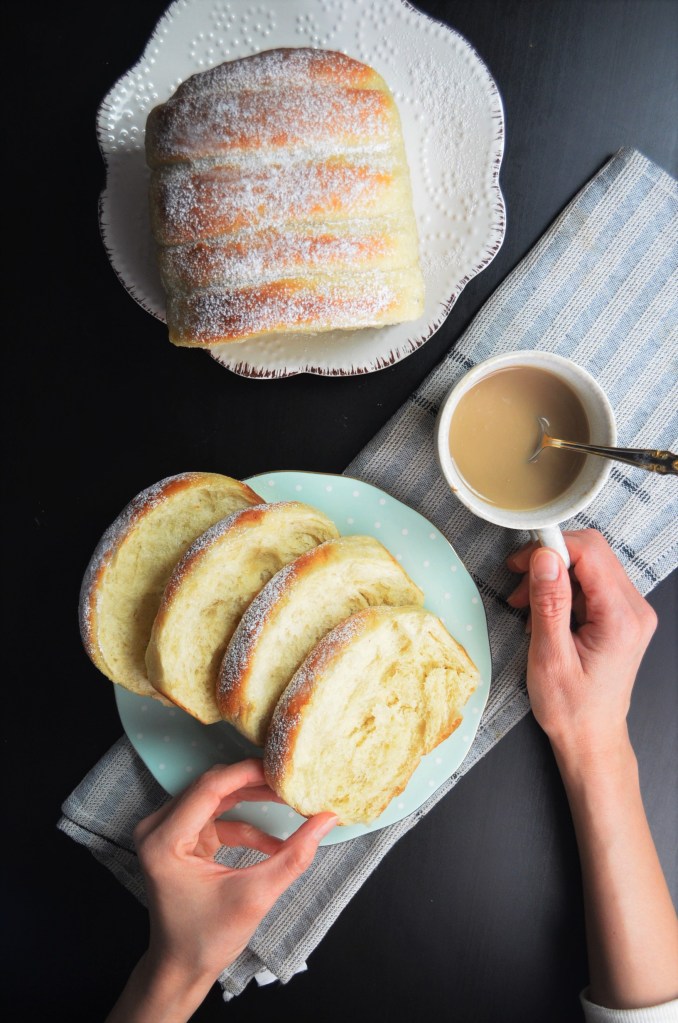
- Let Cool: Dust top with more icing sugar as soon as it comes out o the oven. Let cool for at least 30 minutes before serving. Do not skip the cooling period as it is needed to enhance the texture of the bread.
How to Make Dinner Rolls
Featured Posts:
- Italian Herbs Bread Rolls, Soft and Fluffy!
- Homemade White Bread Loaf
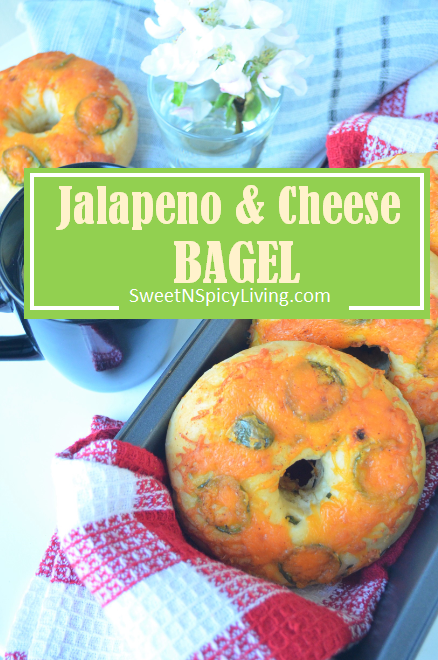
- Small Batch Simplified Jalapeno Cheddar Cheese Bagel, Quick and Easy!
- Dinner Rolls For Two
- Homemade Soft Garlic Bread
- How to Make NO Yeast Pizza
- NO Yeast Sandwich Bread
- Garlic Bread Stick
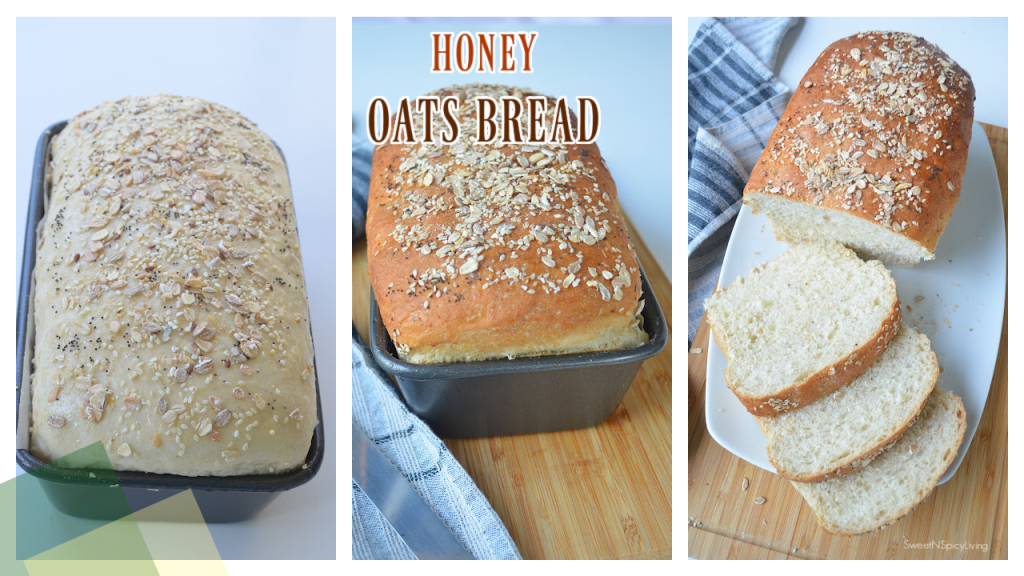
- Honey Oats Bread
- Garlic & Parmesan Bread Rolls
- [VIDEO] Zucchini & Cheddar Cheese Bread
- [VIDEO] Parmesan & Green Onion Pull-Apart Bread




My Latest Video
Thank You for visiting my website. Please don’t forget to click the “Like” button below if you like this recipe. Lastly, did you know that I have a YouTube Channel? Please support my channel by clicking on the “Subscribe” button in my video and the “Bell” icon to get notification of new videos.

FOLLOW SWEETNSPICYLIVING ON SOCIAL MEDIA
Facebook | Instagram | Pinterest | Twitter | YouTube

 SweetnSpicyLiving
 sweetnspicyliving.com
Well this is certainly different and quite inviting!
LikeLike